Before the response
Your dog is looking at you, waiting. What useful first movement is available? Learn to choose a starting point your learner is ready for.
New ebook · Agnieszka Janarek
Your dog is trying.
Why does shaping still feel so hard?
You get one lovely repetition.
Then spend the rest of the session trying to get it back.
Let’s make the next step clearer. I’ll show you how I build behavior, piece by piece, with my Legoland approach—and videos you can click and watch as you read.
Buy the ebook — US$59English PDF · 149 pages · 26 chapters · 31 video examples
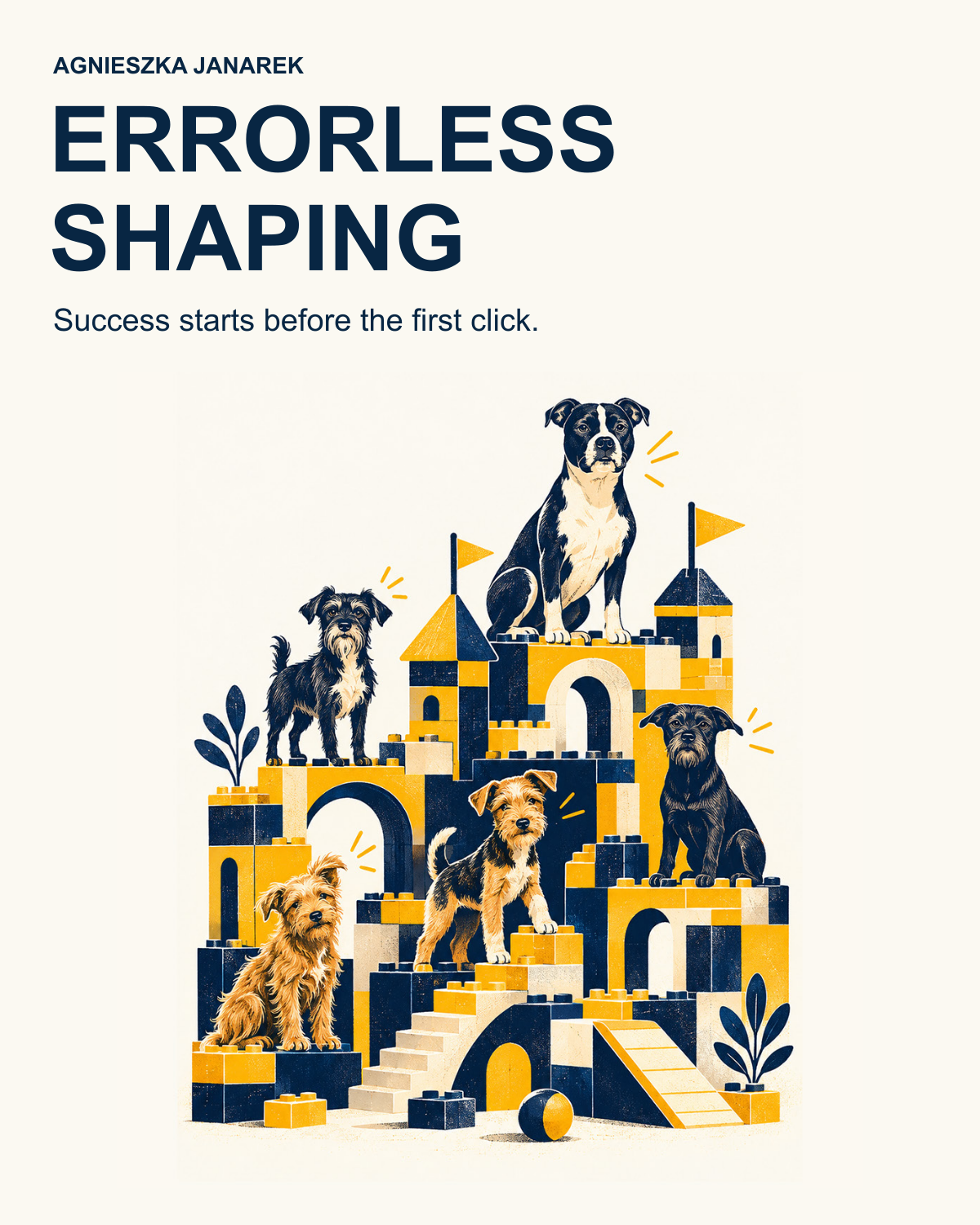 Click. Watch. Return to your plan.Video examples linked inside
You know this moment
Your dog touches the target. Click. Treat. Again. Lovely. You decide it’s time for a little more.
This time, you wait.
Your dog touches it again. Then paws it. Sits. Looks at your hand. The behavior you wanted is somewhere in there, but now you’re both working harder to find it.
Do you click that? Wait a little longer? Go back a step? You came into the session with a plan. Somehow, you’re guessing too.
“Let him figure it out” sounds simple.
Until you look at what he has to figure out.
A response that just worked has stopped working. When we stop reinforcing a previously reinforced response, we’re using extinction. The extra effort that follows can be an extinction burst. The sudden variety can be extinction-induced variability.
And what do we often call it? Creativity.
That is one of the assumptions this book asks you to look at again. Because waiting for your dog to try more is only one way to get to the next step.
What if the next step was clear before you asked?
For me, errorless shaping starts with arranging the antecedents and minimizing variability from the beginning.
When errors happen, treat them as feedback. Use that information to adjust your teaching.
That gives you something practical to work on: the skills your dog already has, the size of the next step, where reinforcement happens, and how the next repetition begins.
You can stop asking, “How long should I wait?” and start asking, “What can I make clearer before we try again?”
My Legoland approach
Think about a clean heel position. It looks like one behavior. Inside it are several skills: pivoting, backing, a tuck sit, head position, standing still.
If one of those pieces is missing, asking for the whole thing again won’t put it there.
In my Legoland approach, we build the pieces separately, make them fluent, then bring them together. You can take a difficult moment apart and work on the piece that needs help.
“We’re stuck” becomes
“I know which block to build next.”
The book walks you through that thinking—and shows it in real training examples.
Take a look inside
Teach the pieces. Build fluency. Bring them together.
For the moments when you don’t know what to change
Your dog is looking at you, waiting. What useful first movement is available? Learn to choose a starting point your learner is ready for.
You see something close. Should you click? Work out what counts before the session, so you can recognize it when it happens.
You got it once. How will you get it again? Look at delivery, transport, and the return to the next repetition as part of the lesson.
149 pages. 26 chapters. One connected approach.
A few pages to look through: the contents, planning a session, a worked example, and raising criteria. Tap any page to read it full size.
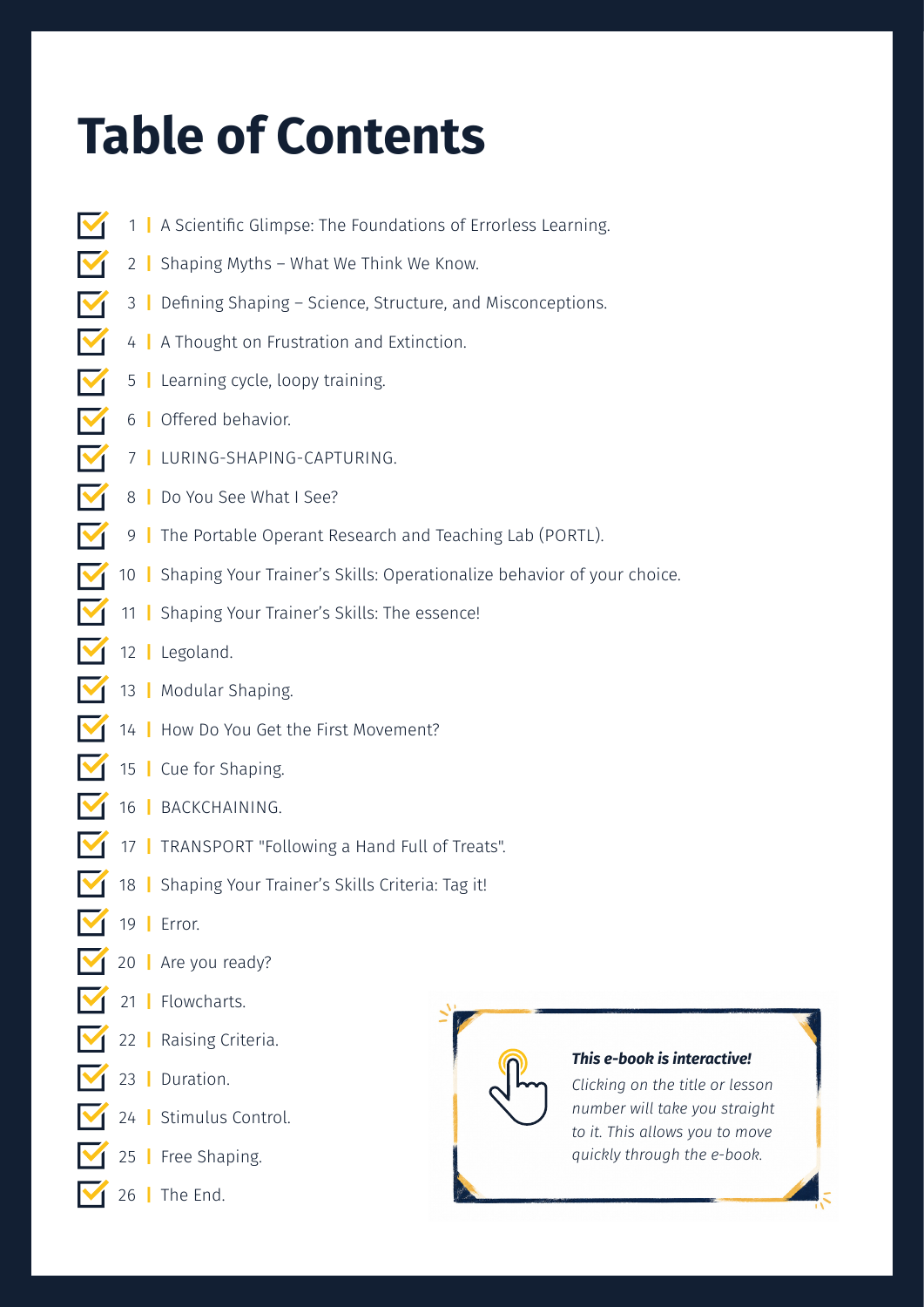
Table of contents
Open full page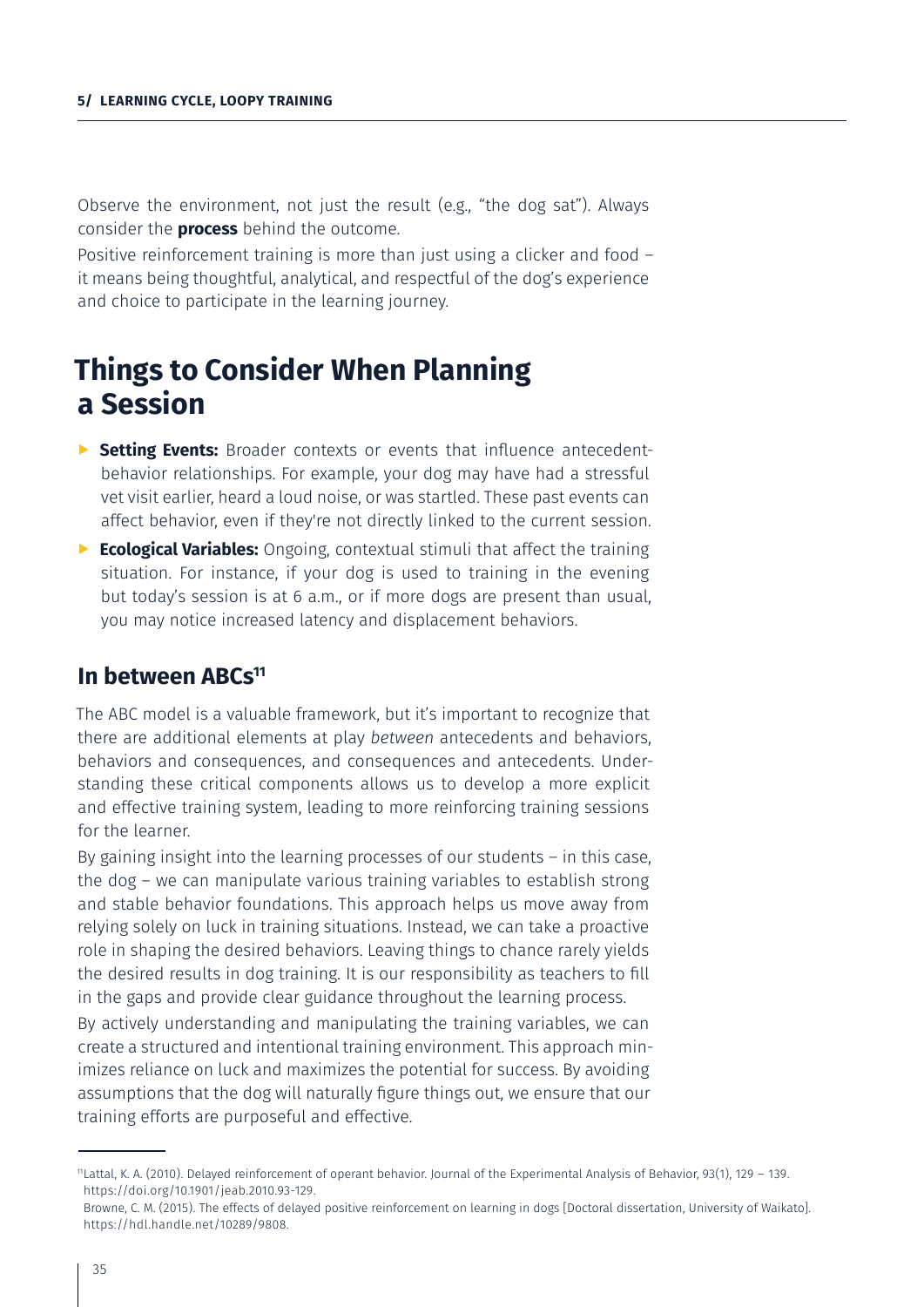
Planning a session · Page 35
Open full page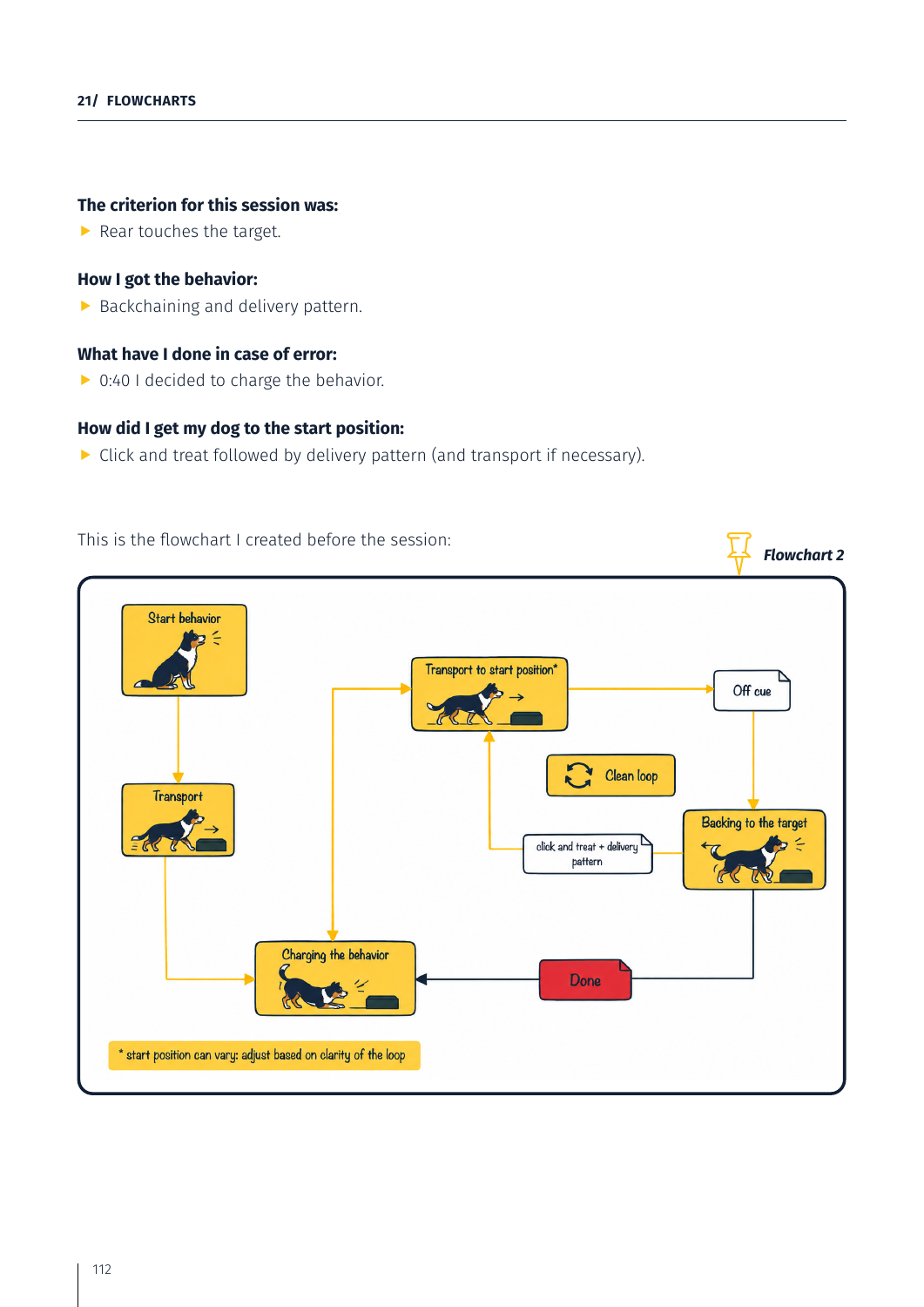
Worked example · Page 112
Open full page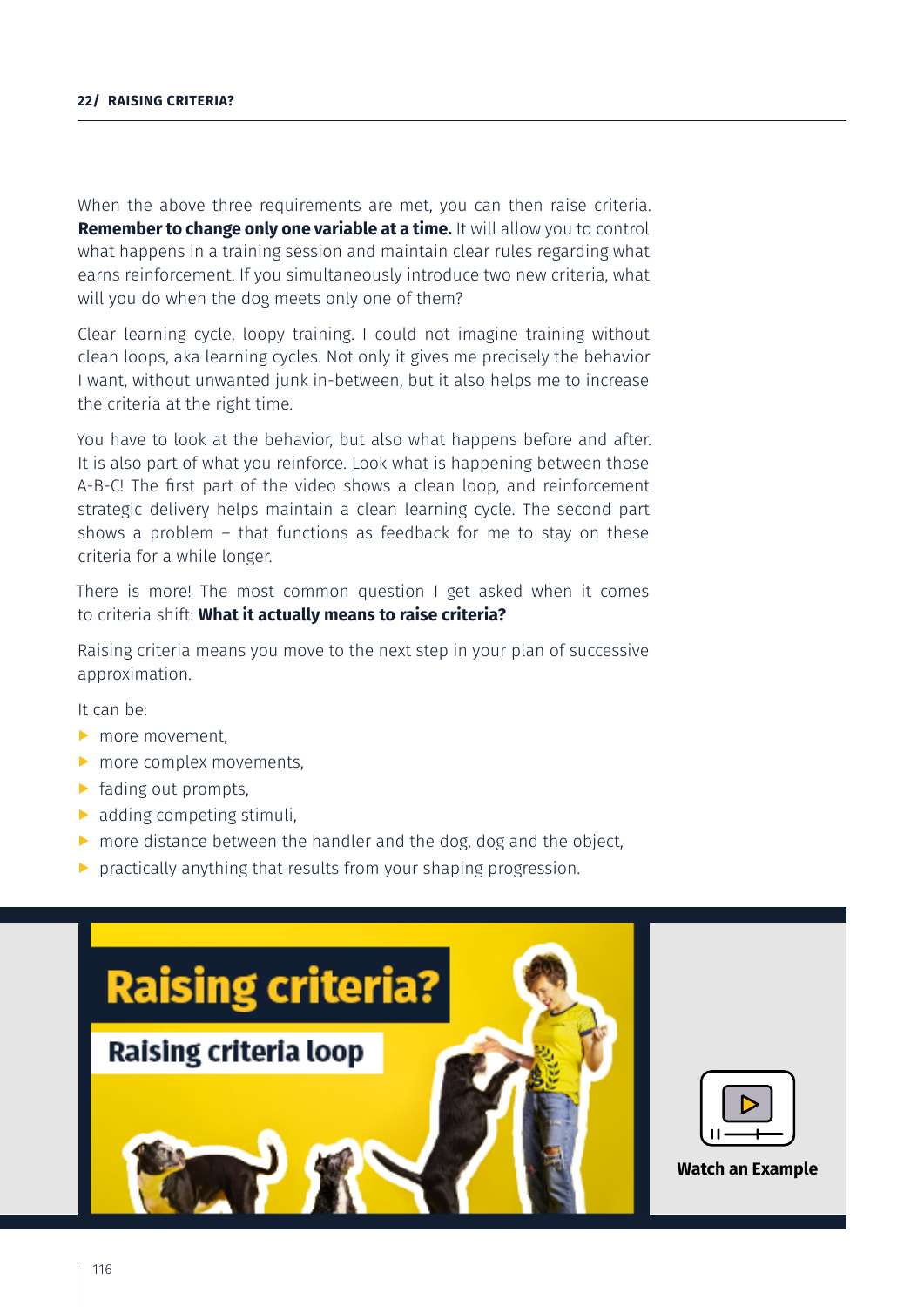
Raising criteria · Page 116
Open full pageErrorless learning, shaping myths, and the role of frustration and extinction.
Training loops, offered behavior, observation, PORTL, and defining exactly what you want to teach.
Modules, the first movement, shaping cues, backchaining, and transport between repetitions.
Criteria, errors, readiness, flowcharts, duration, stimulus control, and free shaping.
Click the video link in the ebook and watch. See the setup, the movement, and what happens next. Then come back to the page. You can move between the explanation and the example as often as you need.
Internet access is needed for the linked videos.

Meet your author
Founder of Tromplo and the teacher behind Shape Me Up!, Agnieszka brings her approach to shaping into a dedicated written guide.
The book connects behavior science with the decisions you face in a session: how to define the behavior, identify missing skills, choose criteria, and make the next repetition possible.
It is for trainers and thoughtful caregivers who want to look closely at how they teach—and have a practical reference open beside their training notes.
Explore Agnieszka’s teaching at Tromplo ↗Your next shaping plan starts here
Go into your next session with a clearer idea of what to teach, what to look for, and what to change when you get stuck.
By Agnieszka Janarek
This button adds the ebook and opens secure Tromplo checkout.
PDF download access after successful payment.
Before you begin
No. For me, errorless is a mindset: arrange the antecedents, minimize variability from the start, and treat errors as feedback. When an error happens, use that information to adjust your teaching.
One English-language PDF ebook: 149 pages and 26 chapters, with clickable contents, illustrations, practical planning tools, and links to video examples. It is a digital product; no printed book is shipped.
Click the video links inside the PDF to open the examples online. The videos are linked, not embedded in the download, so you need an internet connection to watch them.
This is a separate ebook. It brings Agnieszka’s approach to shaping into a written guide you can return to while planning training. It does not include course enrollment, instructor feedback, or mentoring.
Trainers and engaged caregivers who want to examine how they build behavior, define criteria, and arrange the full training loop. Familiarity with reinforcement and marker training will help you put the detail to work.
Purchase through the Tromplo store. After successful payment, your order provides a download link, and the order email gives you access to the PDF. If you use a Tromplo account, you can also find the file under My Account → Downloads. For access help, email contact@tromplo.com.
Yes. Your Dog Is Not Stubborn remains a separate US$49 ebook and workbook. The Animal Trainer’s Comprehensive Handbook and its Brazilian Portuguese edition also remain in the catalogue.
Also on the Tromplo bookshelf

US$49 · Ebook + workbook
A 179-page guide to moving from labels to observable questions and better decisions.
Explore the book ↗US$28 · PDF ebook
A practical foundation in focus, engagement, and structured training sessions. Brazilian Portuguese edition also available.
See the editions ↗